Skip to content
Launching a luxury womenswear label as an independent creator brings unique creative freedom, yet many emerging designers hit roadblocks without clear plans for low volume high-end women’s wear development. If you dream of building a curated brand focused on premium fabrics, bespoke fits and limited-run collections, mastering low volume high-end women’s wear development will define whether your concept moves from sketch to sellable finished garments. This complete guide breaks down every critical phase of low volume high-end women’s wear development, shared from hands-on experience supporting dozens of startup fashion brands navigating low volume high-end women’s wear development for their debut collections.
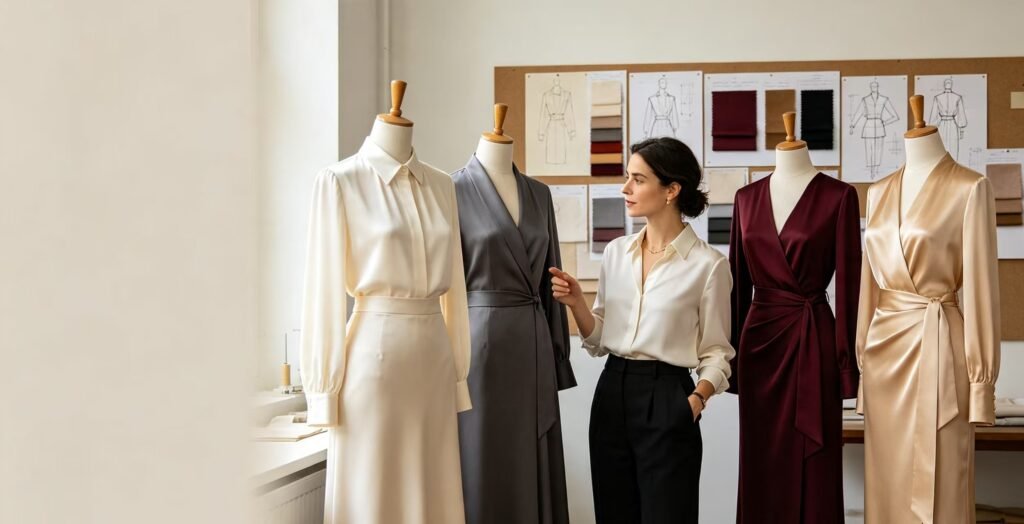
Before diving into production timelines, let’s clarify what makes low volume high-end women’s wear development completely different from mass fast-fashion manufacturing. Mass apparel prioritizes thousands of identical units to cut per-item costs. In contrast, low volume high-end women’s wear development centers on craftsmanship, small order minimums, custom detailing and preserving design integrity, even when you only plan to produce 30–150 pieces per style. Successful low volume high-end women’s wear development rejects the pressure to scale fast; instead, it prioritizes perfecting silhouette, fabric quality and construction to connect with buyers seeking timeless luxury over disposable trends.
Step 1: Lock Your Design Scope Before Starting Low Volume High-End Women’s Wear Development
One of the costliest mistakes new founders make during low volume high-end women’s wear development is overloading their first collection. Many startups draft 15+ styles only to discover low volume high-end women’s wear development stretches budgets thin when sampling too many silhouettes at once.
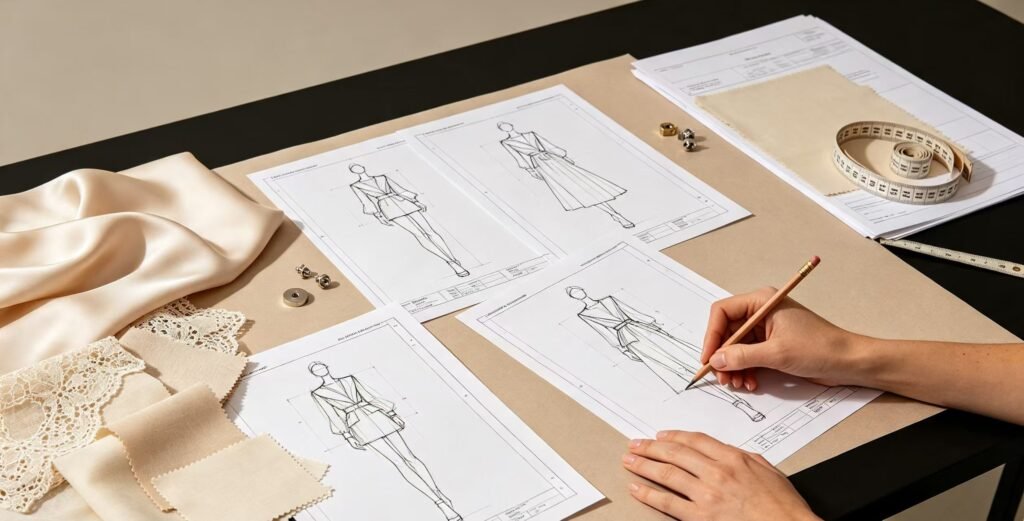
For smooth low volume high-end women’s wear development, limit your launch line to 4–8 core styles. Build comprehensive technical packs, and turn rough sketches into precise pattern notes before you contact any factory. Suppliers supporting low volume high-end women’s wear development rely on clear specifications; vague drawings lead to repeated sample revisions that blow out your timeline and budget. When preparing documentation for low volume high-end women’s wear development, include fabric swatches, stitch references, embroidery guidelines and exact sizing rules to avoid miscommunication with your production partner.
Step 2: Select a Manufacturer Experienced in Low Volume High-End Women’s Wear Development
Not every apparel factory can handle low volume high-end women’s wear development. Most large-scale factories are built for bulk orders and will refuse small runs or sacrifice finish quality to meet tight schedules.
Your ideal partner specializes specifically in low volume high-end women’s wear development. Ask potential manufacturers to share past portfolio samples of luxury small-batch womenswear. Confirm they offer toile prototyping, fit adjustments and support custom trims—all non-negotiable elements of low volume high-end women’s wear development. Do not overlook sampling rules during negotiations for low volume high-end women’s wear development: confirm toile fees, limits on free revisions and whether sample costs can be deducted once bulk production begins. Reliable teams focused on low volume high-end women’s wear development will openly walk you through every sampling stage, from initial toile to pre-production prototypes.
Step 3: Optimize Sampling Workflow for Low Volume High-End Women’s Wear Development
Sampling is the backbone of low volume high-end women’s wear development, and cutting corners here creates irreversible errors in your final collection.
For low volume high-end women’s wear development, start with a toile prototype. As we often advise emerging designers, you do not always need physical toile shipping. Ask your maker to fit the toile on an X-size model and share detailed photos and videos covering front, back, side profiles and close-up construction details. This tactic speeds up low volume high-end women’s wear development and reduces unnecessary international shipping costs for both you and your manufacturer. After you approve the toile, move forward to formal samples made with your selected luxury fabrics, lace and hardware. Keep detailed feedback logs at every sampling checkpoint throughout low volume high-end women’s wear development, so your pattern maker can implement adjustments consistently.
Step 4: Fabric & Trim Sourcing Strategies for Low Volume High-End Women’s Wear Development
Material choices make or break low volume high-end women’s wear development, and sourcing premium textiles for small runs creates its own challenges. Luxury materials such as silk, Tencel and fine linen often carry higher minimum order requirements.
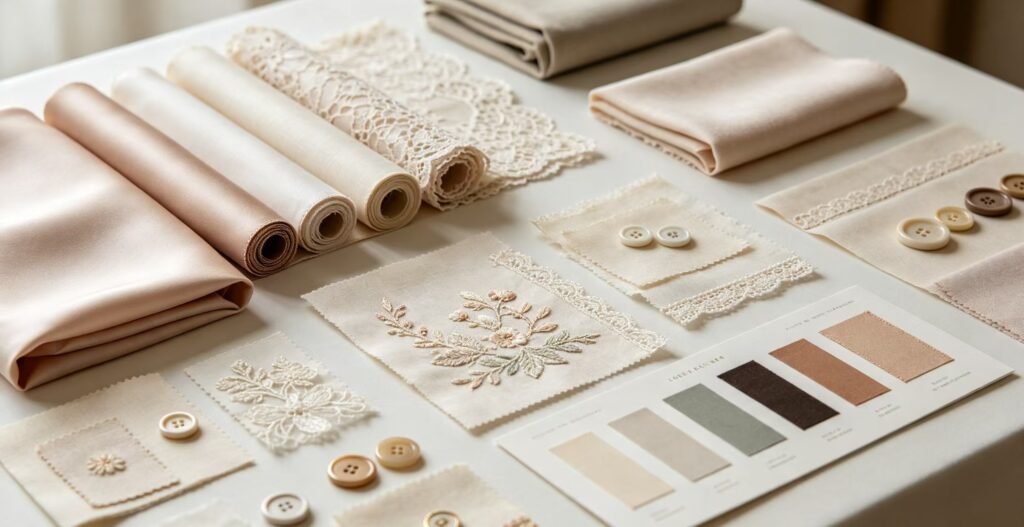
To streamline low volume high-end women’s wear development, work with fabric suppliers who sell offcuts or small rolls for startup brands. Group fabric orders across multiple styles to meet minimums without buying excessive stock. For custom embroidery, custom buttons and exclusive trims, confirm lead times early in low volume high-end women’s wear development. Many artisanal trim makers require multi-week lead times, and delays here will pause your entire low volume high-end women’s wear development timeline. Always request physical colour cards, sort and finalise shades before cutting begins; colour mismatches are one of the most frequent setbacks in low volume high-end women’s wear development.
Step 5: Budget Planning Critical for Low Volume High-End Women’s Wear Development
It is easy to underestimate costs when planning low volume high-end women’s wear development. Unlike mass production, per-unit costs stay higher for small batches, and you must allocate funds for sampling, pattern making, fabric, trims, shipping and quality checks.
Build a layered budget for low volume high-end women’s wear development, and reserve 15% extra for unexpected revisions. Many first-time founders pause low volume high-end women’s wear development halfway because they fail to account for multiple sample rounds and custom material expenses. Set clear minimum order targets aligned with your sales forecast. Do not overproduce during low volume high-end women’s wear development; excess inventory cripples new luxury fashion startups aiming for a limited, exclusive brand positioning.
Step 6: Quality Control & Launch Prep After Low Volume High-End Women’s Wear Development
Once low volume high-end women’s wear development wraps and bulk production finishes, consistent quality control remains essential. High-end customers pay premium prices for flawless stitching, precise fit and clean finishing.
Create a simple quality checklist for every garment born out of low volume high-end women’s wear development. Verify seam construction, embroidery alignment, colour fastness and sizing consistency before goods ship to you. You can also prepare branded packaging, custom gift bags and swing tags while production completes. All these small touches reinforce the luxury positioning you built through careful low volume high-end women’s wear development.
Final Thoughts
Low volume high-end women’s wear development does not have to feel overwhelming for startup fashion brands. By narrowing your collection scope, partnering with knowledgeable manufacturers, respecting each sampling stage and planning budgets thoroughly, you can turn your creative vision into a cohesive luxury womenswear range. Approach low volume high-end women’s wear development patiently; prioritise quality over rapid scaling, and let thoughtful low volume high-end women’s wear development lay a lasting foundation for your independent fashion label.