Skip to content
For luxury fashion buyers, material quality defines brand reputation. Many luxury fashion buyers rely only on hand feel and visual checks, yet overlooking formal luxury fabric testing standards leads to costly returns, brand reputation damage, and failed seasonal launches. Mastering reliable luxury fabric testing standards separates successful luxury fashion buyers from those who face avoidable supply chain risks. This guide breaks down the non-negotiable luxury fabric testing standards every sourcing professional should embed into every sampling and bulk order workflow.
Luxury textiles including silk, cashmere, wool bouclé, and linen blends demand stricter evaluation than mass-market materials. Generic textile checks are never enough; tailored luxury fabric testing standards account for delicate fiber properties, premium finishing techniques, and the long-term wear expectations of luxury consumers. Without standardized luxury fabric testing standards, you cannot confirm if a supplier’s swatch will maintain its texture, colour, and shape after washing, transport, or repeated wear. Every luxury fashion buyer should build a checklist built around verified luxury fabric testing standards before approving any fabric for production.
1. Fiber Composition Verification – Foundation of All Luxury Fabric Testing Standards
The first checkpoint within formal luxury fabric testing standards is fiber composition testing. Counterfeit blended fabrics are widespread in premium textile supply chains. Visual inspection cannot distinguish pure cashmere from wool blends or genuine mulberry silk from synthetic imitations. Reliable luxury fabric testing standards require laboratory fiber analysis to validate every material declaration.
Reputable luxury fabric testing standards demand full documentation of fiber ratios to comply with EU, UK, and US labeling laws. If a mill claims 100% cashmere, your luxury fabric testing standards must include microscopic analysis or chemical solubility testing to confirm authenticity. Skipping this step violates core luxury fabric testing standards and exposes your brand to fines, customer complaints, and reputational harm. Always cross-reference lab reports against your agreed luxury fabric testing standards before locking in bulk fabric orders.
2. Colorfastness Testing – Non-Negotiable Luxury Fabric Testing Standards
Colour stability is one of the most heavily weighted rules inside professional luxury fabric testing standards. Luxury customers expect garments to resist fading, bleeding, and colour transfer. Leading luxury fabric testing standards specify four mandatory colourfastness evaluations: wash fastness, perspiration fastness, rubbing fastness, and light fastness.
Standard luxury fabric testing standards set minimum grade requirements via AATCC and ISO testing methods. Most luxury brands adopt a minimum grade 4 rating within their internal luxury fabric testing standards. Lightweight silk and delicate printed fabrics require even tighter thresholds in your luxury fabric testing standards. When negotiating with fabric mills, clearly share your luxury fabric testing standards for colour performance to avoid inconsistent dye lots between samples and mass production.
3. Dimensional Stability & Shrinkage Control
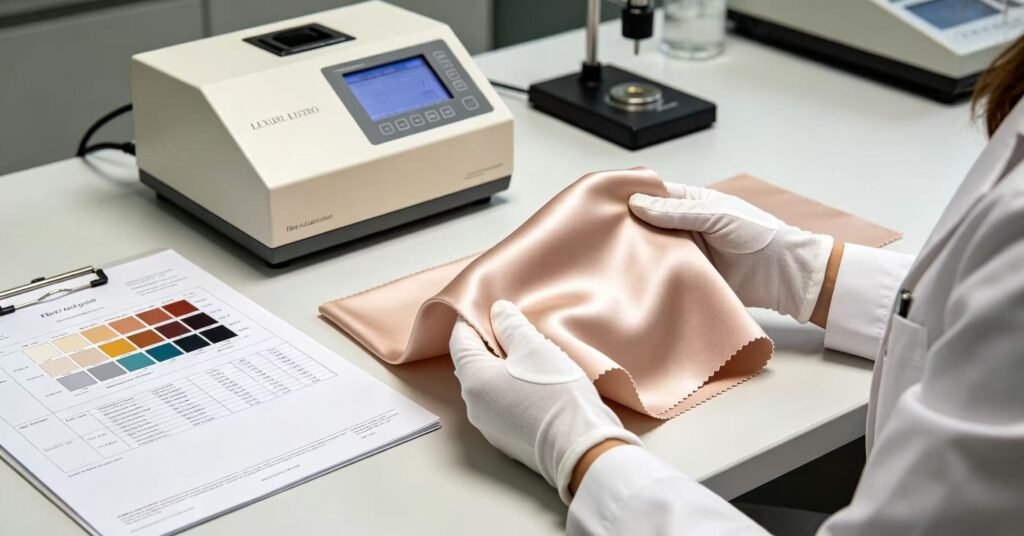
Dimensional stability testing holds a vital position in universal luxury fabric testing standards. Luxury tailored pieces, blouses, and outerwear cannot warp or shrink after the first clean. Premium luxury fabric testing standards define maximum acceptable shrinkage percentages for woven and knitted luxury fabrics.
For wool, cashmere, and silk blends, your luxury fabric testing standards must separate washing shrinkage from dry-clean shrinkage limits. Many suppliers rely on informal pre-wash treatments that fail long term; only testing aligned with official luxury fabric testing standards delivers predictable results. Enforce your luxury fabric testing standards by requesting pre-production shrinkage reports on every fabric batch.
4. Physical Durability Tests: Pilling, Tear & Seam Slippage
Delicate luxury fibers often appear premium but lack structural strength. Comprehensive luxury fabric testing standards include abrasion resistance, pilling testing, tear strength, and seam slippage assessments. For bouclé, tweed, and lightweight silk, seam slippage criteria in your luxury fabric testing standards prevent split seams in finished luxury garments.
High-end consumer expectations mean your luxury fabric testing standards cannot compromise durability. Even the most attractive fabric swatch must pass all physical checks outlined in your luxury fabric testing standards. Share your full set of luxury fabric testing standards with suppliers at the sampling stage so mills adjust finishing processes to hit your targets.
5. Chemical Safety Compliance in Luxury Fabric Testing Standards
Modern luxury fabric testing standards extend beyond physical performance to chemical safety. Global luxury buyers face strict restrictions on formaldehyde, heavy metals, and banned azo dyes. Leading luxury fabric testing standards align with OEKO-TEX, REACH, and regional textile safety regulations.
Sustainable luxury brands build chemical limits directly into their official luxury fabric testing standards. If your brand targets eco-conscious shoppers, update your luxury fabric testing standards to include testing for harmful finishing agents. Always confirm suppliers understand and can meet all chemical requirements written into your luxury fabric testing standards.
6. Implement Luxury Fabric Testing Standards in Your Sourcing Workflow
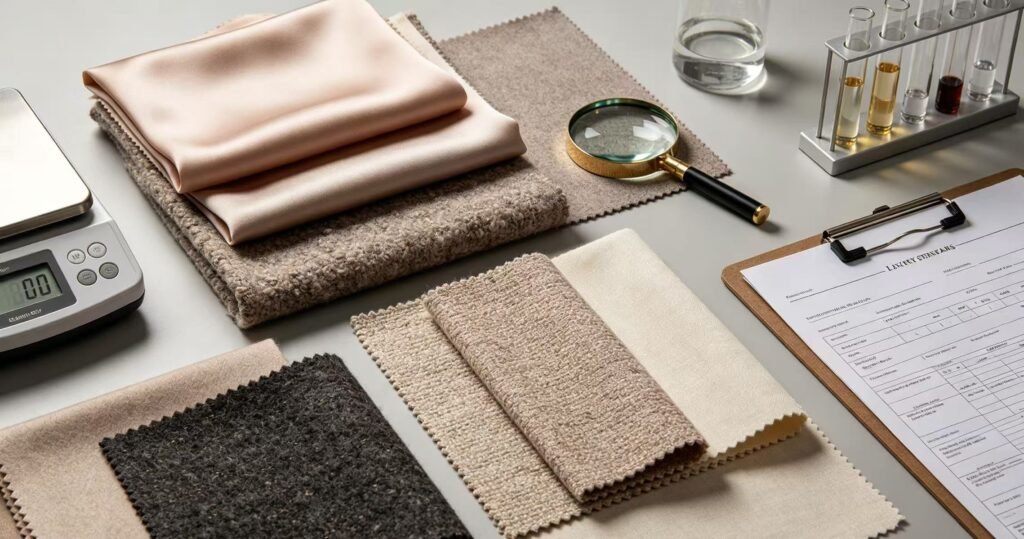
Knowing the rules of luxury fabric testing standards delivers zero value without consistent implementation. Luxury fashion buyers should follow three simple steps to activate their luxury fabric testing standards:
- Attach your complete luxury fabric testing standards to every supplier contract and proforma sample order.
- Test pre-production samples against your luxury fabric testing standards before bulk fabric cutting.
- Randomly audit bulk fabric batches to confirm ongoing compliance with your luxury fabric testing standards.
Many sourcing teams make the mistake of only testing one swatch. Rigorous luxury fabric testing standards require spot checks across different dye lots, as mill conditions shift between production runs. Treat adherence to your luxury fabric testing standards as a non-negotiable supplier KPI.
Final Thoughts
Luxury fashion survives on consistent, predictable quality. Robust luxury fabric testing standards turn subjective material preferences into objective, enforceable sourcing rules. Every luxury fashion buyer should refine, document, and enforce clear luxury fabric testing standards to minimise risk, protect brand value, and deliver products that match luxury consumer expectations. Whether you source silk from Asia or wool from European mills, unified luxury fabric testing standards create transparency and trust across your entire textile supply network.