If you’re in clothing sourcing, you’ve probably heard of OEKO-TEX Standard 100—but do you really get its value for your business? In today’s competitive market, this certification isn’t just a label; it builds trust, ensures compliance, and sets your brand apart. Whether you’re sourcing fast fashion, luxury wear, or baby clothes, OEKO-TEX Standard 100 is non-negotiable. I’m breaking down its key details for your sourcing efforts.
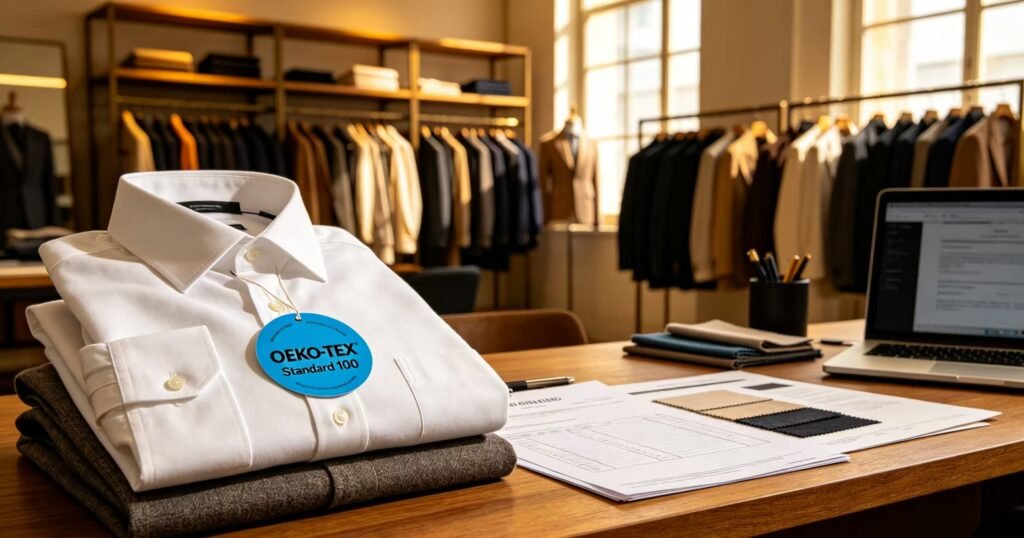
So, what is OEKO-TEX Standard 100? It’s a global, independent certification that tests every part of a garment—fabric, thread, buttons, even labels—to ensure they’re free of harmful substances. Unlike some certifications, it focuses on the final product, not just materials or production steps. Launched in 1992, it’s now a trusted tool for brands and sourcing pros worldwide to guarantee safety.
Why does OEKO-TEX Standard 100 matter for clothing sourcing? Today’s consumers care deeply about what they wear—they want clothes free of toxic chemicals that harm skin or health. As a sourcing professional, this certification keeps consumers safe and shields your brand from costly recalls, bad press, and legal trouble. It’s your sourcing safety net.
The OEKO-TEX Standard 100 testing process is rigorous. Independent, accredited labs check garments for over 1,000 harmful substances—regulated chemicals like formaldehyde and lead, plus non-regulated ones like PFAS. Its limits are often stricter than global laws, adding extra protection for you and your customers.

OEKO-TEX Standard 100 uses a four-class system based on skin contact (Class 1 is strictest). Class 1 is for baby clothes (0–36 months), Class 2 for direct-skin items (t-shirts, underwear), Class 3 for limited-contact pieces (jackets, sweaters), and Class 4 mostly for home textiles. Knowing these classes ensures you source the right certified products.
How does OEKO-TEX Standard 100 impact your supply chain? Prioritizing it holds suppliers accountable—they must meet strict rules at every production step and provide documentation. This means more transparent supply chains, fewer quality issues, and more confidence in your products. Its modular system also lets you use pre-certified components, saving time and testing costs.
Don’t mix up OEKO-TEX Standard 100 with organic certification. Organic focuses on raw material growth (e.g., organic cotton), while OEKO-TEX Standard 100 focuses on final product safety. A conventional cotton garment can still be certified if it’s chemical-free, and organic cotton might not be if processed with toxins.
To integrate OEKO-TEX Standard 100 into your sourcing strategy: Learn its requirements, vet suppliers for certification (verify docs on the official site), communicate your needs clearly, and highlight it in marketing—consumers trust the label.
Common OEKO-TEX Standard 100 challenges? Cost (worth the long-term benefits) and finding reliable certified suppliers (work with trusted sourcing agents). It updates testing criteria annually, so stay current to stay compliant.
For sourcing pros, OEKO-TEX Standard 100 is a competitive edge. It helps you stand out, comply with global regulations (EU REACH, U.S. CPSIA), and partner with major retailers who recognize the certification.
Take baby clothing sourcing: OEKO-TEX Standard 100 Class 1 ensures every component is tested for harmful substances, keeping babies safe and parents reassured. It adds prestige for luxury brands and mitigates risk for fast fashion.
Remember: OEKO-TEX Standard 100 isn’t one-and-done. Certificates expire after a year, so ensure suppliers renew annually to avoid non-compliant products.
OEKO-TEX Standard 100 doesn’t cover sustainability or fair labor—that’s for OEKO-TEX STeP or GOTS. But it’s the foundation of safe clothing sourcing, non-negotiable for any brand.
In short, OEKO-TEX Standard 100 is essential for clothing sourcing. It keeps products safe, compliant, and aligned with consumer demands. Prioritizing it protects your brand and drives growth.