Skip to content
Starting a new fashion brand is an exciting journey full of creative design ideas and market ambitions. However, fabric sourcing is the most fundamental step that decides product quality and brand reputation for every startup. Many new fashion brands rush into production without mastering the rules of fabric sourcing, and simple negligence in this process can turn into costly losses—industry data shows that 43% of new fashion brands fail within their first year, and 28% of those failures are directly linked to poor fabric sourcing decisions.
If you are a new brand founder, learning to avoid typical mistakes in fabric sourcing can help you build a stable and reliable supply chain. Many beginners treat fabric sourcing as a simple purchasing step, but professional brand owners know that careful fabric selection and supplier management are the core of sustainable operation. Below we break down 7 classic, costly mistakes new fashion brands often make in fabric sourcing, backed by real industry data and practical insights to help you steer clear of unnecessary risks.
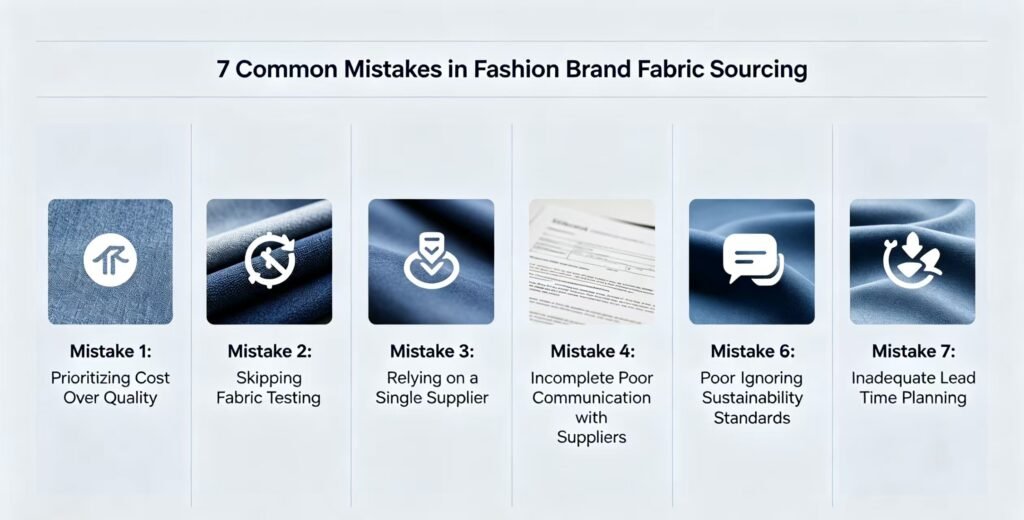
Mistake 1: Choosing Fabric Only by Appearance, Not Performance
The first common error in fabric sourcing is selecting materials purely based on online pictures or sample book appearance. New brands often fixate on color, texture, and visual appeal, while ignoring critical performance metrics like shrinkage rate, color fastness, and durability. According to a 2025 report by the American Apparel and Footwear Association (AAFA), 37% of returns for new fashion brands stem from fabric-related issues—most commonly fading (41%) and shrinkage (32%). For example, a cotton jersey fabric that looks perfect in photos may shrink up to 8% after the first wash if it’s not pre-treated, ruining the fit of your garments and leading to negative customer reviews. Always request physical swatches and lab test reports (such as AATCC 135 for shrinkage and ISO 105-E04 for color fastness) before finalizing any fabric decision.
Mistake 2: Prioritizing Low Prices Over Supplier Reliability
Budget control is crucial for new fashion brands, but chasing the lowest possible fabric price often backfires. Many new brands overlook supplier credibility in favor of cost savings, only to face inconsistent quality, delayed shipments, or hidden corners. Industry research shows that low-cost fabric suppliers (those offering prices 20% below market average) have a 68% higher defect rate compared to mid-tier suppliers. For instance, a startup that opted for a cheap polyester fabric supplier ended up with 15% of their bulk order having uneven dye lots—costing them $8,000 in rework and lost sales. Reputable suppliers typically have a defect rate of ≤2%, while low-cost alternatives often exceed 5%. When sourcing fabric, balance price with supplier reviews, production capacity, and quality control processes.
Mistake 3: Ignoring International Certification Requirements
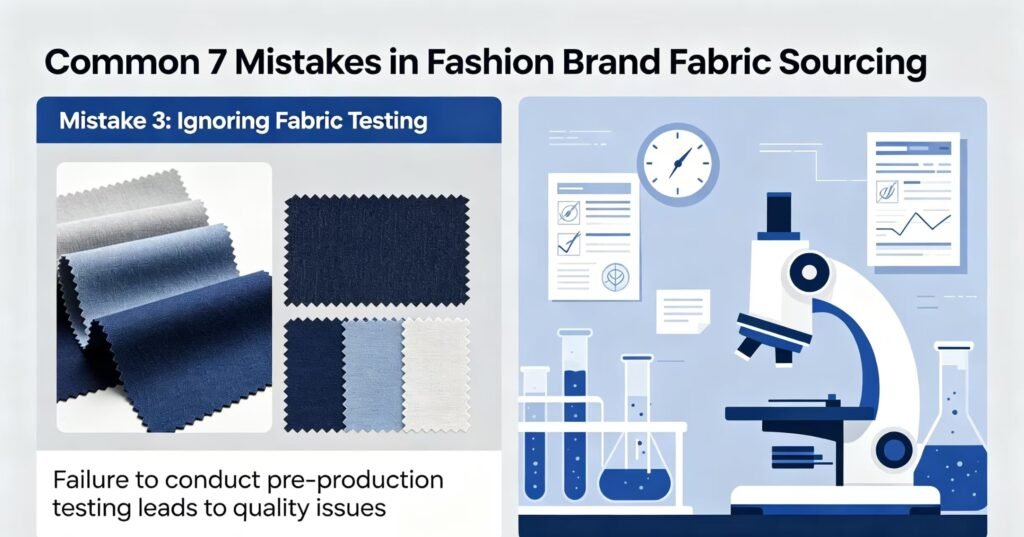
If you plan to sell to the EU, US, or other mainstream international markets, textile certifications are non-negotiable—but many new brands skip this step in fabric sourcing. In 2023, a European apparel company lost over $2 million due to shipment rejections when their fabrics failed EU REACH chemical tests. Key certifications to verify include OEKO-TEX Standard 100 (bans harmful substances, adopted by 65–70% of Chinese mills), GRS (for recycled fabrics, used by 25–30% of global suppliers), and ISO 14001 (environmental management). For US markets, compliance with CPSIA standards is mandatory for children’s clothing, while the EU requires REACH compliance for all textile products. Skipping certification checks can lead to customs detention, market bans, or costly product recalls—all of which can sink a new brand.
Mistake 4: Neglecting MOQ Planning Before Sourcing
Minimum Order Quantity (MOQ) is a critical factor in fabric sourcing, but many new brands fail to plan their order volume in advance, leading to inventory waste or production delays. MOQs vary by fabric type: knits typically require 500–5,000 units, while organic cotton often has higher MOQs (1,000+ units) due to limited mill availability. A 2026 survey of new fashion brands found that 41% overordered fabric by 20–30% because they didn’t calculate MOQs properly, tying up cash flow and warehouse space. On the flip side, 29% couldn’t meet supplier MOQs, forcing them to compromise on fabric quality or pay premium fees. To avoid this, map out your seasonal sales forecast first—for example, if you expect to sell 500 units of a t-shirt, source fabric for 550–600 units to account for waste, and negotiate flexible MOQs with suppliers (e.g., prepaying 50% of material costs can reduce MOQs by 30–50%).
Mistake 5: Skipping Physical Swatch Confirmation
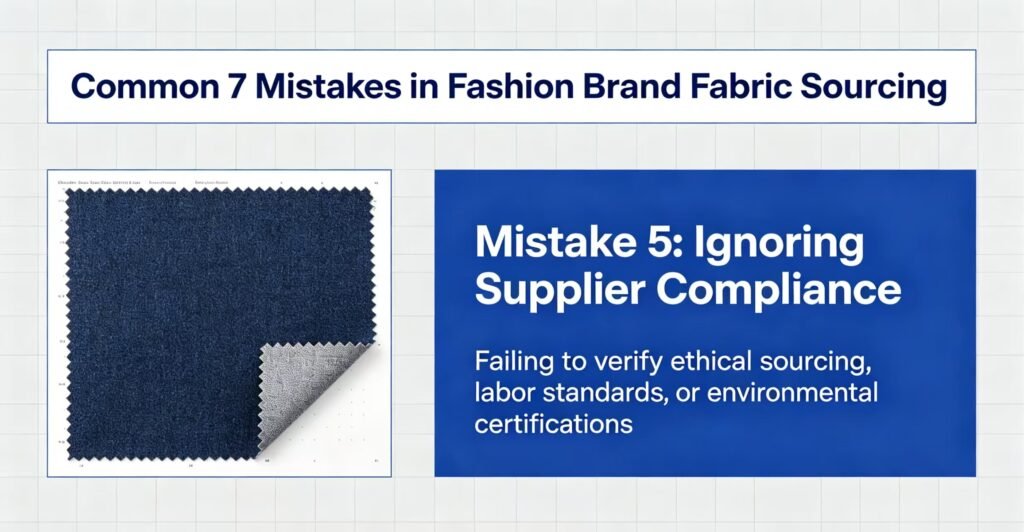
Relying solely on supplier descriptions or digital photos is a costly oversight in fabric sourcing. Digital images cannot accurately reflect fabric weight, hand feel, thickness, or weave detail—and even small variations can ruin your designs. Industry standards allow for a ±3–5% variance in fabric weight between samples and bulk production (per ASTM D3776), but this can still impact fit and aesthetics. For example, a denim sample that weighs 14.0 oz may arrive in bulk at 13.3–14.7 oz, which can change the garment’s drape and durability. Always request physical swatches (at least 10×10 cm) and sign off on them before placing bulk orders—this step alone reduces fabric-related disputes by 72%.
Mistake 6: Overlooking Hidden Costs in Sourcing
New brands often only compare raw fabric unit prices, ignoring hidden costs that can inflate their budget by 15–30%. These hidden expenses include dyeing fees ($30–$80 per color), custom finishing, shipping ($0.30–$1.50 per yard for ocean freight), third-party inspection ($180–$300 per man-day), and lab testing ($100–$300 per report). For example, a startup that quoted $5 per yard for organic cotton forgot to factor in dyeing ($50 per color) and shipping ($0.80 per yard), leading to a total cost of $6.20 per yard—24% higher than expected. To avoid this, ask suppliers for a full cost breakdown upfront, including all pre-production and logistics fees, and budget an extra 10–15% for unexpected costs.
Mistake 7: Failing to Reserve Adequate Lead Time
Fabric production and delivery require significant lead time, but many new brands arrange their launch schedules too tightly, leaving no buffer for delays. The typical lead time for bulk fabric orders from China (a top sourcing hub handling 25% of global textile trade) ranges from 30–60 days, with custom fabrics taking 55–60 days and stock fabrics 30 days. During peak seasons (e.g., Chinese New Year), lead times can extend by 15–20 days. A 2025 study found that 38% of new fashion brands missed their seasonal launch dates due to fabric delays, resulting in a 40% drop in first-month sales. To prevent this, reserve an extra 2–3 weeks in your timeline—for example, if you need fabric for a fall launch in September, place your order by June to account for production and shipping delays.
Conclusion
For new fashion brands, fabric sourcing is not just a purchasing task—it is the foundation of product quality, brand credibility, and long-term success. By avoiding these seven mistakes, backed by real industry data and practical tips, you can streamline your sourcing process, control costs, and ensure consistent quality. Remember: fabric sourcing is an investment, not an expense. Taking the time to research, verify, and plan will help your brand gain a firm foothold in the competitive global fashion market.