Skip to content
If you’re a fashion brand owner, boutique buyer, or entrepreneur sourcing women’s apparel, understanding how to distinguish ordinary and high-end women clothing factories is critical to your brand’s success. The factory you choose directly impacts fabric quality, craftsmanship, fit consistency, and final product value—all of which shape customer satisfaction and brand reputation. In this guide, we break down the key differences between ordinary and high-end women clothing factories, so you can confidently partner with manufacturers that align with your premium vision.
1. Fabric Sourcing: The Foundation That Separates High-End Women Clothing Factories from Ordinary Ones
The first and most obvious way to distinguish ordinary and high-end women clothing factories is fabric selection. High-end women clothing factories prioritize premium, durable, and luxurious fabrics, while ordinary women clothing factories cut costs with low-quality materials.
High-end women clothing factories source from certified, reputable mills worldwide—think soft silk, high-count cotton, stretchable Italian wool, and sustainable blends like Tencel or linen. These fabrics undergo strict pre-production testing for colorfastness, shrinkage, and durability, ensuring every piece feels luxurious and lasts for years. In contrast, ordinary women clothing factories opt for cheap, synthetic fabrics that feel stiff, pill easily, and fade after one or two washes. They skip fabric testing, leading to inconsistent texture and poor wearability—common issues that hurt customer loyalty.
For example, a high-end women clothing factory crafting a slip dress will use smooth, lustrous silk with a subtle drape, while an ordinary women clothing factory will use thin, shiny polyester that clings awkwardly and wrinkles instantly. This fabric gap alone is enough to distinguish ordinary and high-end women clothing factories at a glance.
2. Craftsmanship & Production Process: Precision Defines High-End Women Clothing Factories
Another key way to distinguish ordinary and high-end women clothing factories is their approach to craftsmanship and production. High-end women clothing factories treat garment-making as an art, focusing on precision, detail, and quality over quantity. Ordinary women clothing factories prioritize fast, mass production with minimal care for finishing.
High-end women clothing factories employ skilled artisans and pattern-makers with years of experience. They create detailed, custom patterns for each style, with multiple fittings to perfect the fit—especially critical for women’s wear, where flattering silhouettes matter most. Every stitch is precise: high-end women clothing factories use 12–15 stitches per centimeter (double the density of ordinary factories), reinforced seams, and invisible zippers. They also add premium finishing touches: hand-sewn buttonholes, fully lined interiors, and clean, flat seams that never irritate the skin.
On the other hand, ordinary women clothing factories rely on unskilled labor and generic, one-size-fits-all patterns. They rush production to meet high-volume quotas, resulting in loose threads, uneven stitching, and misaligned prints. Seams are often frayed, zippers get stuck, and linings are cheap or non-existent. These flaws are dead giveaways that you’re working with an ordinary women clothing factory—not a high-end one.
Whether it’s a tailored blazer or a flowy summer dress, the craftsmanship gap makes it easy to distinguish ordinary and high-end women clothing factories once you inspect the details.
3. Equipment & Facility Standards: Modernization Separates High-End Women Clothing Factories
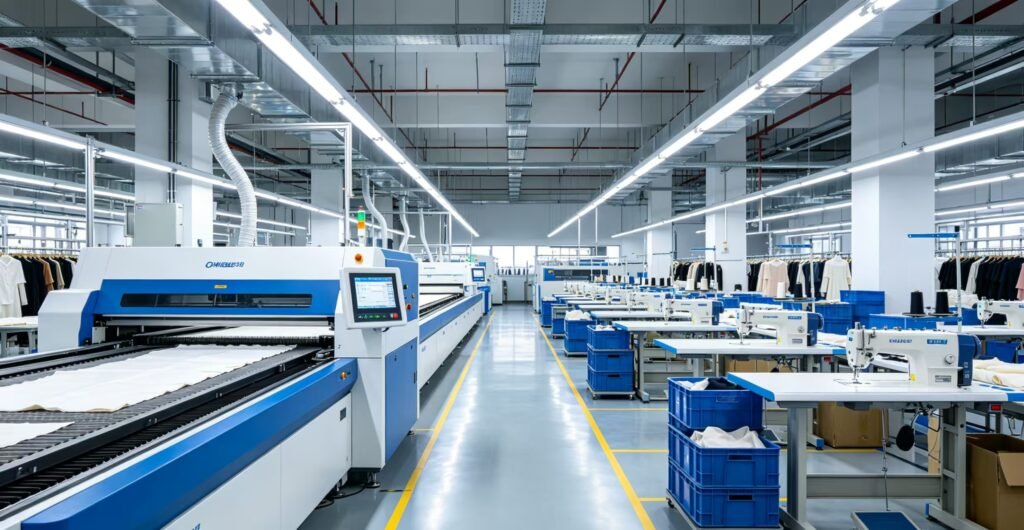
If you want to distinguish ordinary and high-end women clothing factories, look no further than their production facilities and equipment. High-end women clothing factories invest in modern, automated machinery and clean, organized workspaces, while ordinary women clothing factories use outdated tools and crowded, unsanitary facilities.
High-end women clothing factories feature purpose-built layouts with dedicated zones for cutting, sewing, ironing, and quality control. They use advanced technology like digital laser cutters (for precise fabric cutting with minimal waste), automated sewing machines, and AI-powered inspection systems to catch defects early. These factories also comply with international safety and ethical standards (BSCI, SLCP), ensuring fair labor practices and safe working conditions.
In contrast, ordinary women clothing factories operate in old, cramped buildings with poor lighting and ventilation. They rely on manual sewing machines and hand-cutting, leading to inconsistent sizing and fabric waste. Many skip safety certifications, raising red flags for ethical sourcing and brand risk. A quick factory tour is enough to distinguish ordinary and high-end women clothing factories—the difference in cleanliness, organization, and technology is undeniable.
4. Quality Control (QC) Systems: Rigor Defines High-End Women Clothing Factories
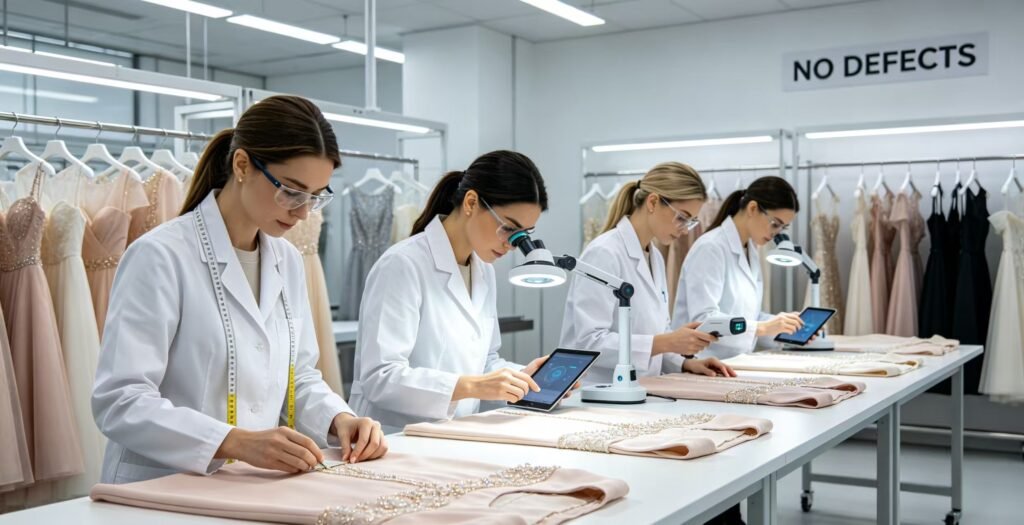
Quality control is a make-or-break factor to distinguish ordinary and high-end women clothing factories. High-end women clothing factories implement strict, multi-step QC processes to ensure zero defects, while ordinary women clothing factories skip thorough checks to save time.
High-end women clothing factories conduct QC at every production stage: pre-production fabric inspection, in-line checks during sewing, and final inspection before shipping. Every garment is examined for sizing accuracy, stitch quality, print alignment, and fabric flaws. Defective pieces are immediately rejected, so only perfect items reach clients. This rigorous QC is why high-end women clothing factories consistently deliver flawless products that meet luxury brand standards.
Ordinary women clothing factories, however, perform minimal or no QC. They prioritize speed over quality, so defective garments—with loose threads, mismatched prints, or sizing errors—often reach customers. This leads to high return rates, negative reviews, and damaged brand reputation. If a factory can’t explain its QC process clearly, it’s almost certainly an ordinary women clothing factory—not a high-end one.
5. Customization & Design Support: High-End Women Clothing Factories Add Value
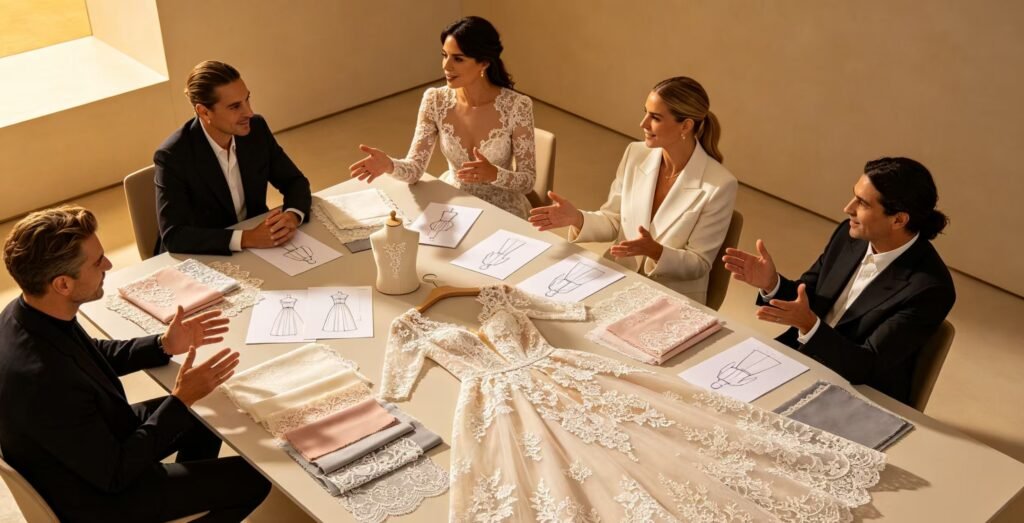
A final way to distinguish ordinary and high-end women clothing factories is their ability to offer customization and design support. High-end women clothing factories act as true partners, helping brands bring unique visions to life, while ordinary women clothing factories only produce generic, pre-made styles.
High-end women clothing factories have in-house design teams that collaborate with brands to develop custom prints, unique silhouettes, and exclusive details. They handle small-batch orders (50–500 pieces) with flexibility, making them perfect for boutique brands or limited-edition collections. Whether you need a custom lace overlay, a tailored fit adjustment, or a sustainable fabric swap, high-end women clothing factories deliver tailored solutions.
Ordinary women clothing factories, by contrast, only offer standard, mass-produced styles with no customization options. They require large minimum order quantities (MOQs) of 1,000+ pieces and refuse to adjust designs or fabrics. If you want your brand to stand out with unique, premium pieces, partnering with an ordinary women clothing factory will limit your growth—high-end women clothing factories are the only choice for creative, luxury-focused brands.
Final Thoughts: Choose High-End Women Clothing Factories for Long-Term Success
In the competitive world of women’s fashion, partnering with the right factory can make or break your brand. Learning how to distinguish ordinary and high-end women clothing factories empowers you to avoid low-quality manufacturers and align with partners who share your commitment to excellence.
From premium fabric sourcing and precise craftsmanship to modern facilities, strict QC, and customization support—high-end women clothing factories deliver the quality and value that ordinary women clothing factories simply can’t match. By prioritizing high-end women clothing factories, you’ll create beautiful, durable women’s wear that delights customers, builds brand loyalty, and drives long-term success.