Skip to content
If you’ve ever picked up a shirt, sweater, or bed sheet and wondered what the tiny tag inside really means, you’re not alone. Textile labeling rules are more than just a legal box to check—they’re a vital bridge between brands and consumers, ensuring transparency, safety, and satisfaction. Whether you’re a small business owner launching your first clothing line or a shopper trying to make informed choices, understanding textile labeling rules for fiber content, size, and care instructions is non-negotiable. In this guide, we’ll break down everything you need to know about textile labeling rules, demystify confusing jargon, and share practical tips to stay compliant (and avoid costly mistakes).
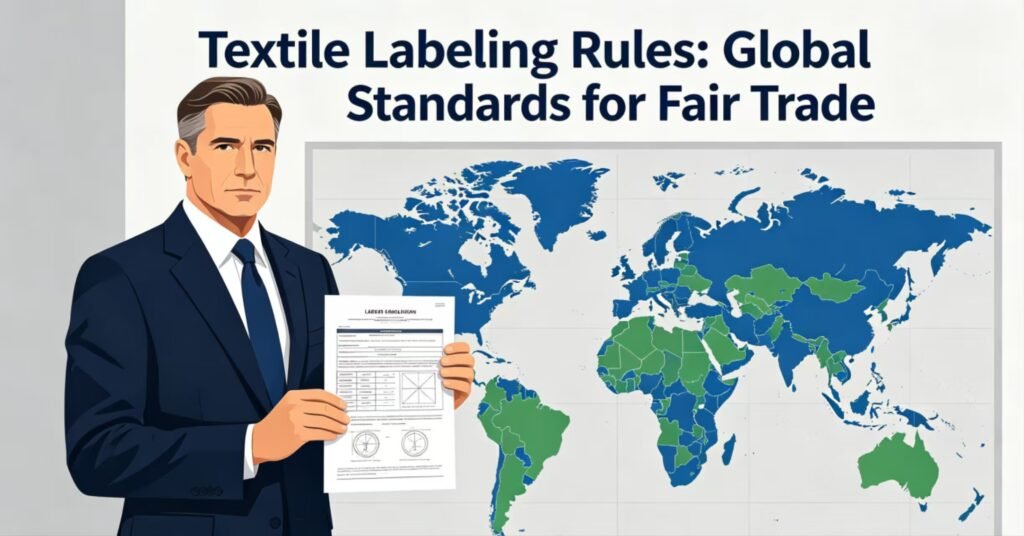
First, let’s start with the basics: textile labeling rules are regulations enforced by governments and international bodies to standardize how textile products are labeled. These rules cover three core areas—fiber content, size, and care instructions—and their purpose is simple: to protect consumers from misleading claims and help brands operate fairly in the global market. No matter where you sell or buy textiles, textile labeling rules apply, and ignoring them can lead to fines, product recalls, or lost customer trust. That’s why mastering textile labeling rules is essential for anyone involved in the textile industry, from manufacturers to retailers to everyday shoppers.
Textile Labeling Rules: Fiber Content – The Foundation of Transparency
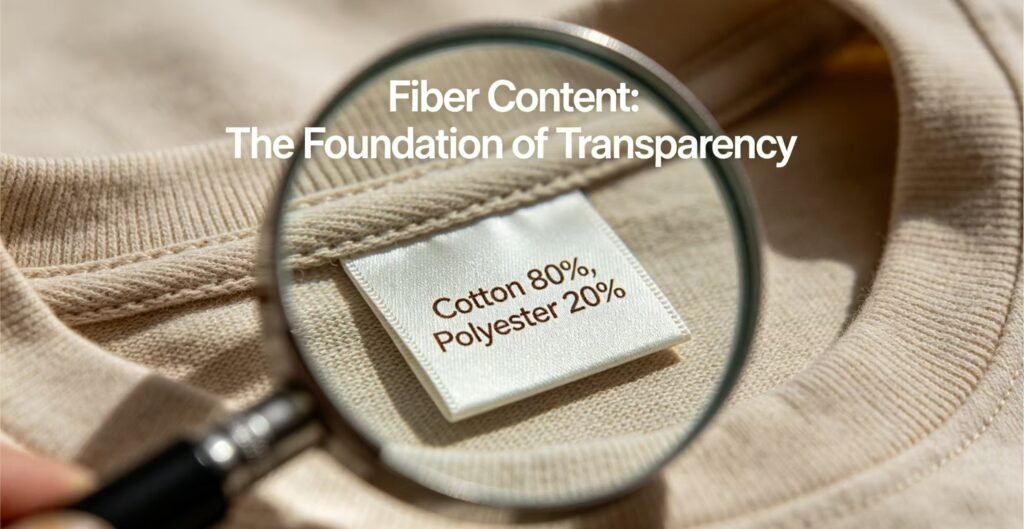
Fiber content is one of the most critical parts of textile labeling rules, and for good reason. Consumers rely on fiber content labels to choose products that fit their needs—whether they’re looking for hypoallergenic fabrics, durable workwear, or eco-friendly materials. Textile labeling rules mandate that every textile product must clearly state its fiber content, including the percentage of each fiber used. This isn’t just a suggestion; it’s a legal requirement in most countries, including the U.S. (enforced by the FTC) and the EU (under Regulation (EU) No 1007/2011).
Under textile labeling rules, fiber content must be listed in descending order by weight. For example, a shirt made of 80% cotton and 20% polyester must list “Cotton 80%, Polyester 20%” on its label. Textile labeling rules also require that manufactured fibers use their generic names—like “polyester” instead of a brand-specific term—and allow for internationally recognized fiber names to ease trade, as updated in recent FTC amendments. Additionally, textile labeling rules state that any fiber making up less than 5% of the total weight can be listed as “other fibers,” unless it has a specific functional purpose (like spandex for stretch).
One common mistake brands make is fudging fiber content percentages to make products seem more premium (e.g., labeling a blend as 100% cotton). But textile labeling rules are strict about accuracy—measured values must not deviate from labeled percentages by more than ±5%, and misleading claims can result in heavy penalties. For consumers, understanding textile labeling rules for fiber content means you can avoid surprises: if you’re allergic to wool, checking the fiber content label (required by textile labeling rules) will help you steer clear of products that contain it. Whether you’re a brand or a shopper, textile labeling rules for fiber content are your guide to honesty and clarity.
Textile Labeling Rules: Size – Ensuring Consistency and Fit
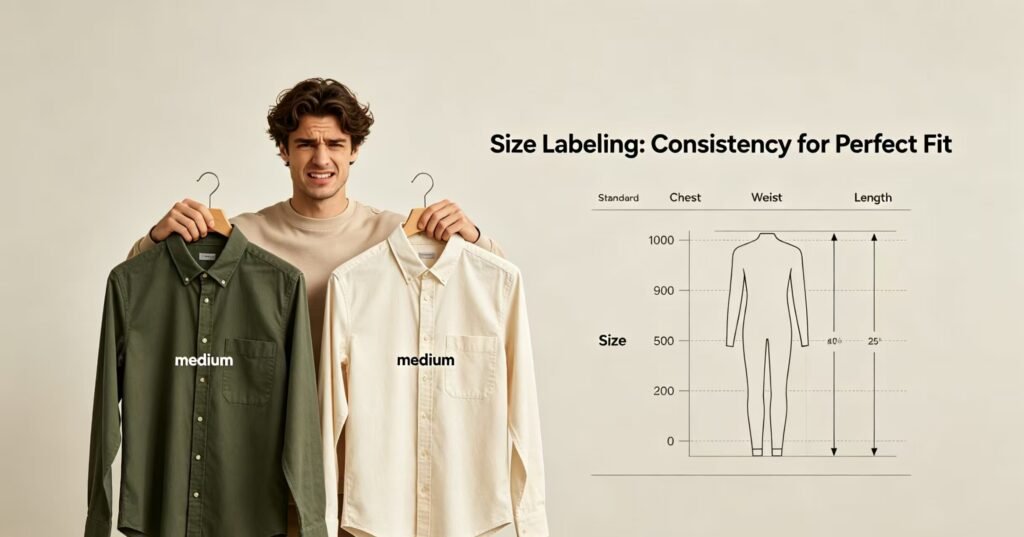
Next to fiber content, size labeling is one of the most frequently used parts of textile labeling rules—especially for clothing. We’ve all been there: ordering a “medium” online only to find it’s too small or too large. Textile labeling rules aim to fix this by standardizing size measurements, so consumers can shop with confidence, and brands can avoid returns and complaints. Textile labeling rules for size vary slightly by region, but the core principle is the same: size labels must be accurate, consistent, and easy to understand.
In the U.S., textile labeling rules require that clothing sizes follow standard measurements (e.g., bust, waist, hip for bottoms) based on industry guidelines. In the EU, textile labeling rules mandate that size labels use the EN 13402 standard, which includes numerical sizes (like 36, 38, 40) and corresponding body measurements. Textile labeling rules also require that size information is prominently displayed—usually on the neck tag for clothing or a visible tag for home textiles—and that it doesn’t fade or wear off over time (thanks to durable labeling requirements in textile labeling rules).
For brands, complying with textile labeling rules for size means investing in consistent sizing across all products. This might involve working with manufacturers to ensure measurements align with regional textile labeling rules and testing samples to avoid discrepancies. For consumers, textile labeling rules for size mean you can compare sizes across brands more easily—no more guessing if a “large” from one brand is the same as a “large” from another. By following textile labeling rules for size, brands build trust, and consumers save time and frustration.
Textile Labeling Rules: Care Instructions – Protecting Products and Consumers
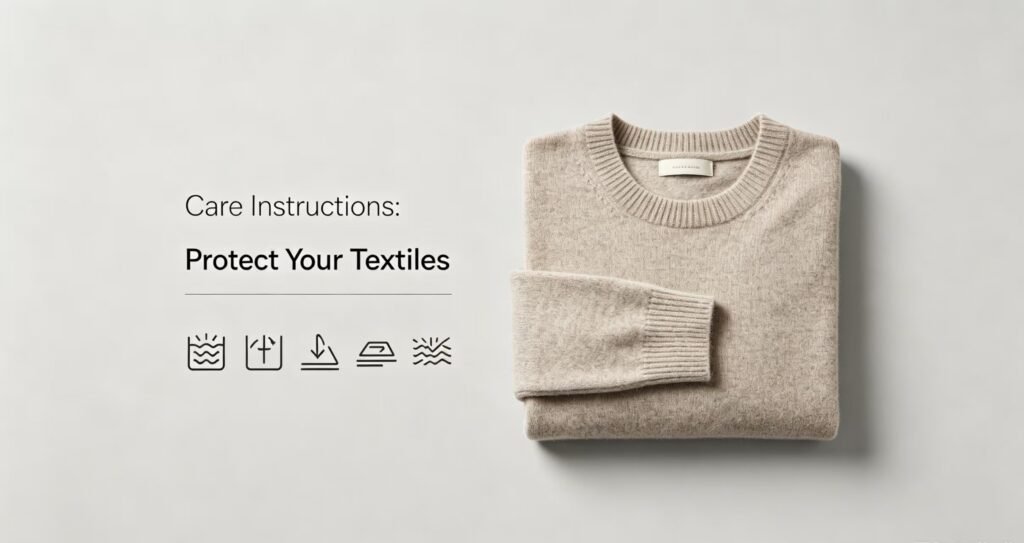
Care instructions are the unsung heroes of textile labeling rules. They tell consumers how to clean, dry, and care for their textile products to keep them looking and feeling their best—and they’re required by textile labeling rules in most countries. While the EU’s textile regulation doesn’t explicitly mandate care labels, textile labeling rules under the EU’s GPSR (General Product Safety Regulation) require that care instructions are included if improper care could pose a safety risk (e.g., shrinking a child’s garment to a dangerous size).
Under textile labeling rules, care instructions must be clear, concise, and use standardized symbols (based on ISO and GINETEX systems) to avoid language barriers. These symbols include icons for washing (a bucket), bleaching (a triangle), drying (a square), ironing (an iron), and dry cleaning (a circle). Textile labeling rules require that these symbols are accurate to the product’s fabric—for example, a wool sweater can’t have a “machine washable” symbol if it will shrink in the wash. Additionally, textile labeling rules state that care instructions must be printed on a durable label that stays attached through multiple washes.
For brands, following textile labeling rules for care instructions means testing products to determine the correct care methods. This might involve washing and drying samples to see how the fabric holds up, then translating that into compliant care symbols. For consumers, textile labeling rules for care instructions mean you can extend the life of your textiles—washing a delicate silk blouse according to the care label (as required by textile labeling rules) will prevent it from tearing or fading. Textile labeling rules for care instructions aren’t just about compliance; they’re about helping consumers get the most out of their purchases.
Why Textile Labeling Rules Matter for Everyone
At this point, you might be wondering: why are textile labeling rules so important? The answer is simple: they protect both brands and consumers. For brands, complying with textile labeling rules helps avoid fines, recalls, and damage to reputation. It also levels the playing field—every brand has to follow the same textile labeling rules, so no one can gain an unfair advantage by misleading consumers. For consumers, textile labeling rules ensure you get what you pay for—no hidden fibers, no inconsistent sizing, and no guesswork when it comes to caring for your items.
Whether you’re a brand owner navigating global regulations or a consumer trying to shop smarter, textile labeling rules are your ally. By understanding and following textile labeling rules, you can build trust, avoid mistakes, and ensure a better experience for everyone involved in the textile journey. Remember, textile labeling rules aren’t just red tape—they’re a commitment to transparency, quality, and fairness.